
Best Anvil for Beginner Blacksmiths: Size, Rebound & Practical Alternatives
When beginners ask what anvil they should buy, the conversation often focuses on size alone. While size is important, it’s only one part of what makes an anvil effective.
A great anvil is defined by:
rebound
mass and stability
usable features
material quality
and suitability for the type of work you plan to do
This guide explains what actually makes a good anvil for beginners, how big it really needs to be, and when alternative or recycled options can work just as well as traditional anvils.
If you’re still planning your overall setup and budget, it’s worth reading our guide on how much it costs to start blacksmithing and our breakdown of essential blacksmith tools for beginners.
What Makes a Good Beginner Anvil?
Quick Answer:
For most beginners, a good anvil:
weighs 30–50 kg (65–110 lb)
has good rebound
is made from steel (not cast iron)
is mounted solidly
has a flat, usable working face
You don’t need a traditional or expensive anvil to start forging effectively.
Why Anvil Weight Matters (But Isn’t Everything)
Mass = Energy Efficiency
An anvil works by returning energy from your hammer blow back into the steel. The heavier and more stable the anvil, the less energy is lost with each strike.
For beginners:
Too light → tiring, inefficient forging
Too heavy → expensive and unnecessary early on
A modestly sized anvil used well will outperform a larger anvil used poorly.
Rebound: The Most Important Anvil Quality
What Is Rebound?
Rebound refers to how much energy an anvil returns when struck.
A simple test:
Drop a small steel ball or lightly tap with a hammer
A good anvil will return a noticeable bounce
Why Rebound Matters
Less effort per strike
Better hammer control
Reduced fatigue
Cleaner, more consistent forging
A smaller anvil with strong rebound will outperform a larger anvil with poor rebound every time.
Anvil Materials: What to Look For (and Avoid)
✔ Steel (Best Choice)
Forged steel or cast steel
Excellent rebound
Durable working face
❌ Cast Iron (Avoid)
Poor rebound
Brittle and prone to chipping
Absorbs hammer energy
Many low-cost anvils are made from cast iron and are best avoided.
Anvil Features: What You’ll Actually Use
Beginners often assume every anvil feature is essential. In practice, only a few matter early on.
The Face
Flat and smooth surface is critical
Minor wear is acceptable
Edges can be softened slightly for safety
The Horn
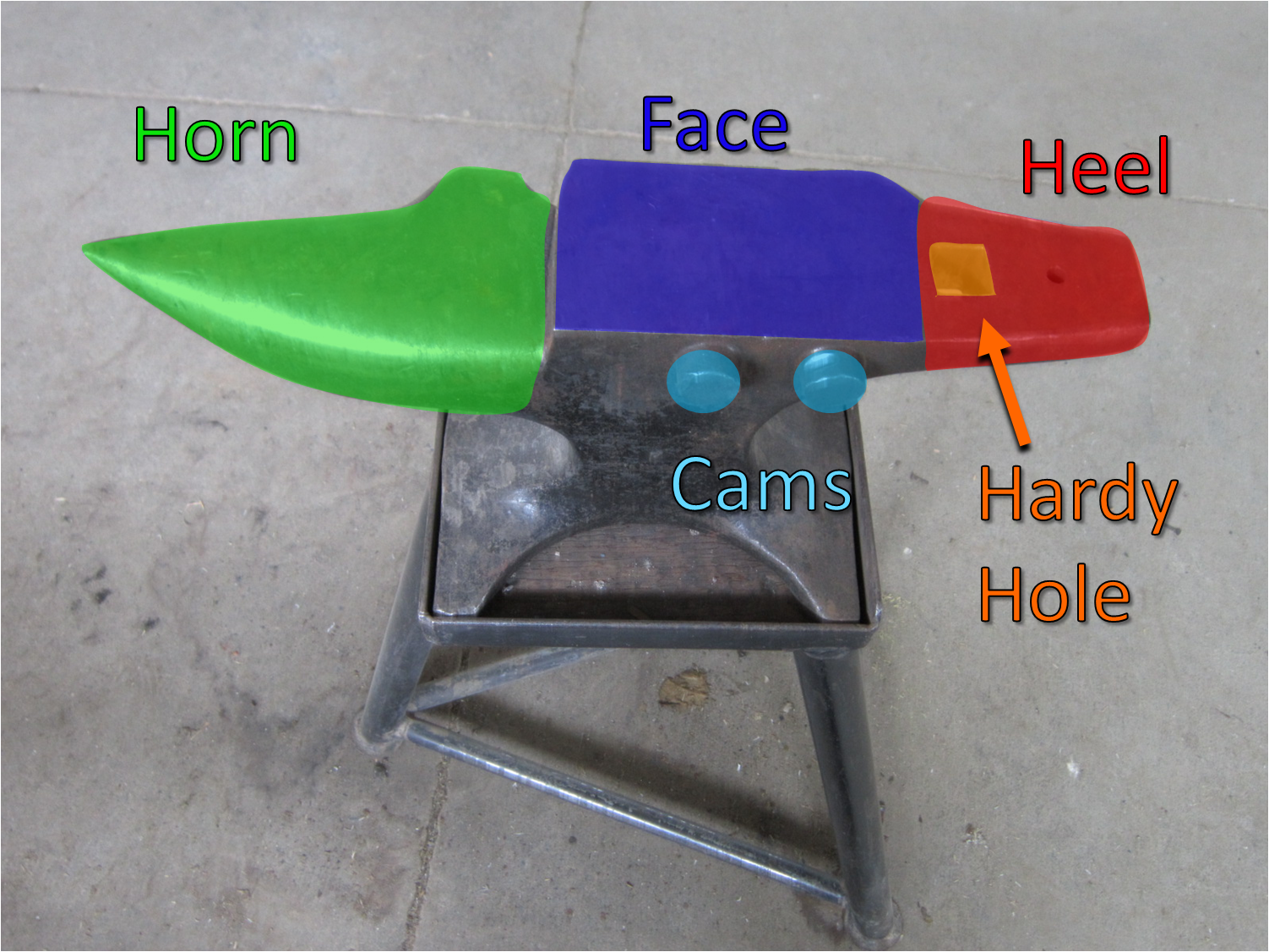
The Face
Flat and smooth surface is critical
Minor wear is acceptable
Edges can be softened slightly for safety
The Horn
Used for bending and forming curves
Helpful, but not essential for early projects
Hardy Hole
Square hole for tooling
Very useful long-term
Not required on day one
Pritchel Hole
Round hole for punching
Rarely used by beginners
A good anvil doesn’t need every feature to be effective.
Common Anvil Styles
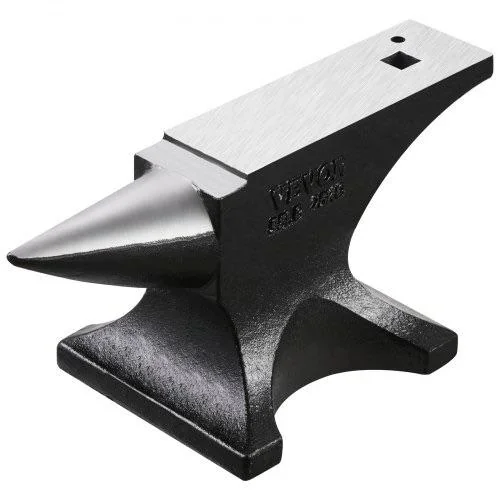
Traditional Pattern Anvils
Flat face with horn and hardy hole
Very versatile
Excellent, but not required to begin
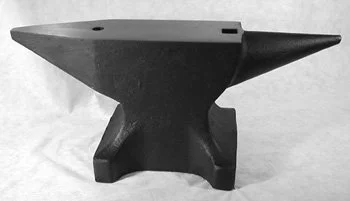
Continental / European Patterns
Often heavier faces
Excellent working surfaces
Common in many workshops
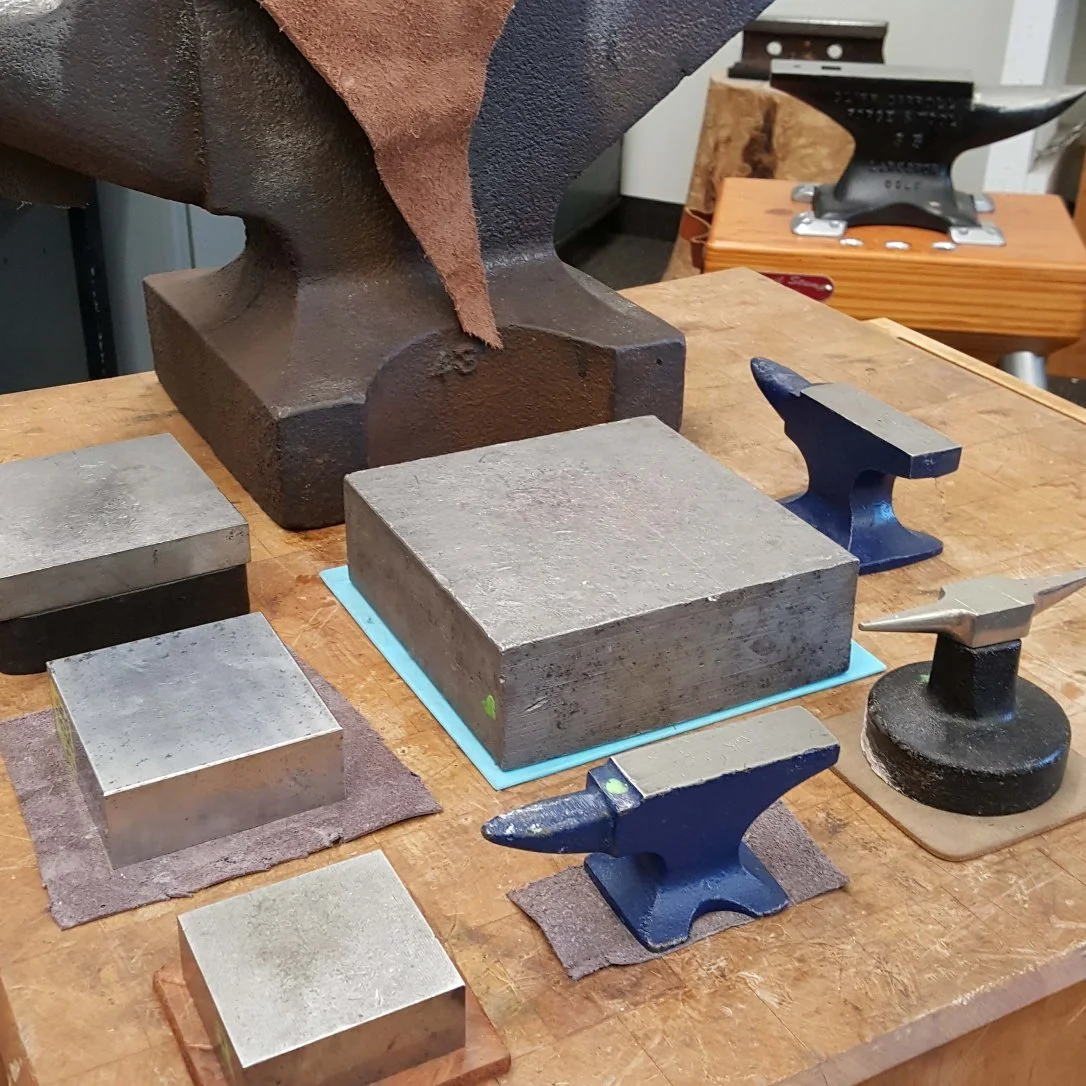
Bench and Block Anvils
Compact and affordable
Suitable for small projects
Limited versatility
All can work well depending on availability and budget.
Recycled & Alternative Anvils (Highly Viable)
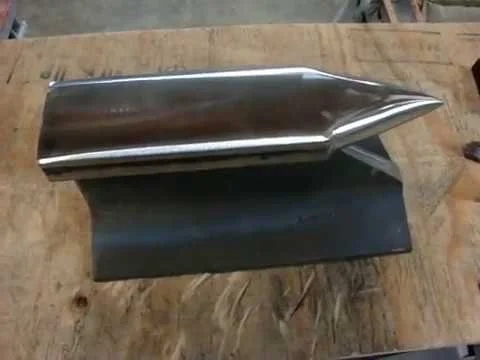
Railway Track Anvils
Railway track is one of the most popular alternative anvil materials.
Pros:
High-quality steel
Good rebound
Often inexpensive or free
Cons:
Narrow working surface
Limited traditional features
Mounted securely, railway track can perform extremely well, especially when oriented vertically.
Solid Steel Alternatives
Large steel blocks
Forklift tines
Machine offcuts or billets
What matters most is:
Mass directly under the hammer
Stability
A clean working surface
Shape is secondary to performance.
Mounting Your Anvil (Often Overlooked)
Even an excellent anvil will perform poorly if mounted badly.
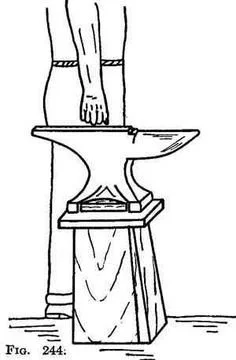
Good Mounting Principles
Solid base (wood block, stump, or steel stand)
No movement or wobble
Height roughly at knuckle level when standing
Proper mounting dramatically improves rebound and comfort.
Common Beginner Mistakes
❌ Buying cast iron because it’s cheap
❌ Obsessing over horn shape
❌ Overspending early
❌ Ignoring rebound and mounting
An anvil is a working tool, not a display piece.
Recommended Beginner Approach
If you’re starting out:
Prioritise rebound and stability
Aim for 30–50 kg, but don’t stress if smaller
Consider used or recycled steel options
Invest time in proper mounting
Upgrade later if your work demands it
Many experienced blacksmiths forged successfully for years on simple setups.
How This Fits Into Your Setup
This guide works alongside:
Together, these guides answer:
What do I need, why do I need it, and what should I prioritise first?
Final Thoughts
A great anvil isn’t defined by tradition or price — it’s defined by how effectively it returns energy and supports your work.
Whether that’s a traditional anvil, a block of steel, or a piece of railway track, the goal is the same:
efficient, controlled forging with minimal effort.
Start practical. Upgrade when your skills demand it.
