
Blacksmith, Bladesmith, Farrier, and Armourer
How These Crafts Differ, Overlap, and Evolved
Introduction
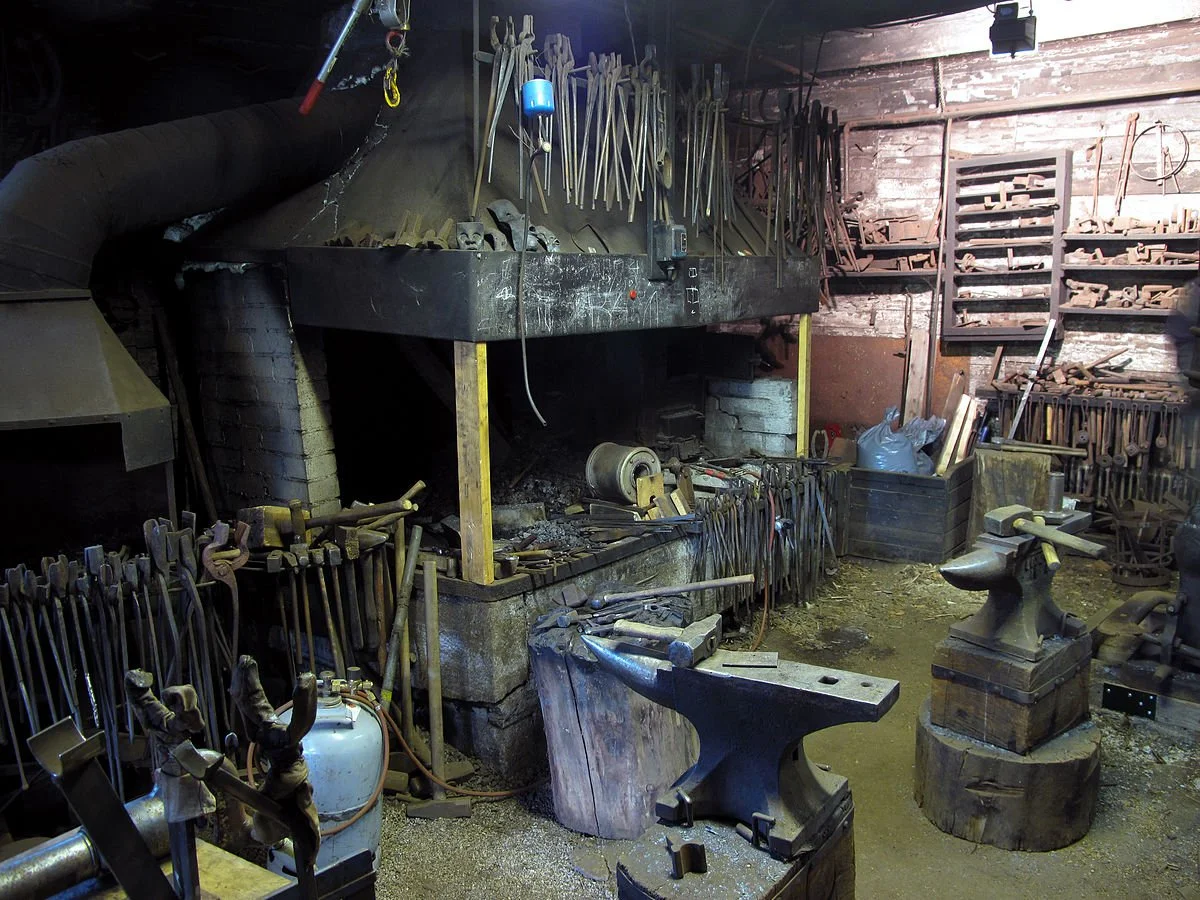
People often use the terms blacksmith, bladesmith, farrier, and armourer interchangeably, usually because they all involve hot metal, hammers, and anvils. From the outside, the work can look similar: fire, steel, and shaping.
In reality, these crafts developed to solve very different problems, and those differences shaped how each discipline works, what skills are prioritised, and how practitioners think about metal.
Understanding the distinction isn’t about labels or hierarchy. It’s about recognising how purpose drives technique, and why someone drawn to one path might find another deeply unsatisfying.
A Shared Origin, Then a Split
Historically, the blacksmith came first.
Early blacksmiths were community problem-solvers. They repaired tools, made hardware, shaped agricultural equipment, and produced anything that required iron or steel. As societies became more complex, certain needs became specialised enough to demand dedicated craftspeople.
Weapons needed better edges. Horses became central to transport and warfare. Armour grew more complex as weapons evolved. From this pressure, specialist smiths emerged — not because blacksmiths couldn’t do the work, but because the work demanded deeper focus.
The Blacksmith: The Foundation Craft
At its core, blacksmithing is about shaping iron and steel to solve practical problems.
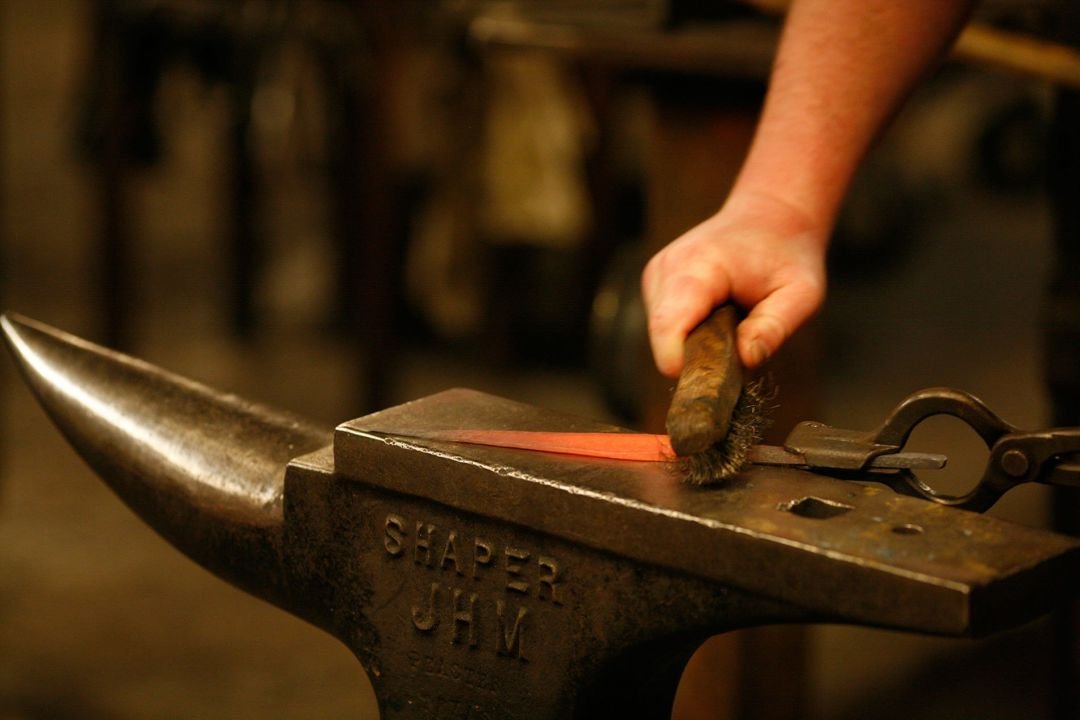
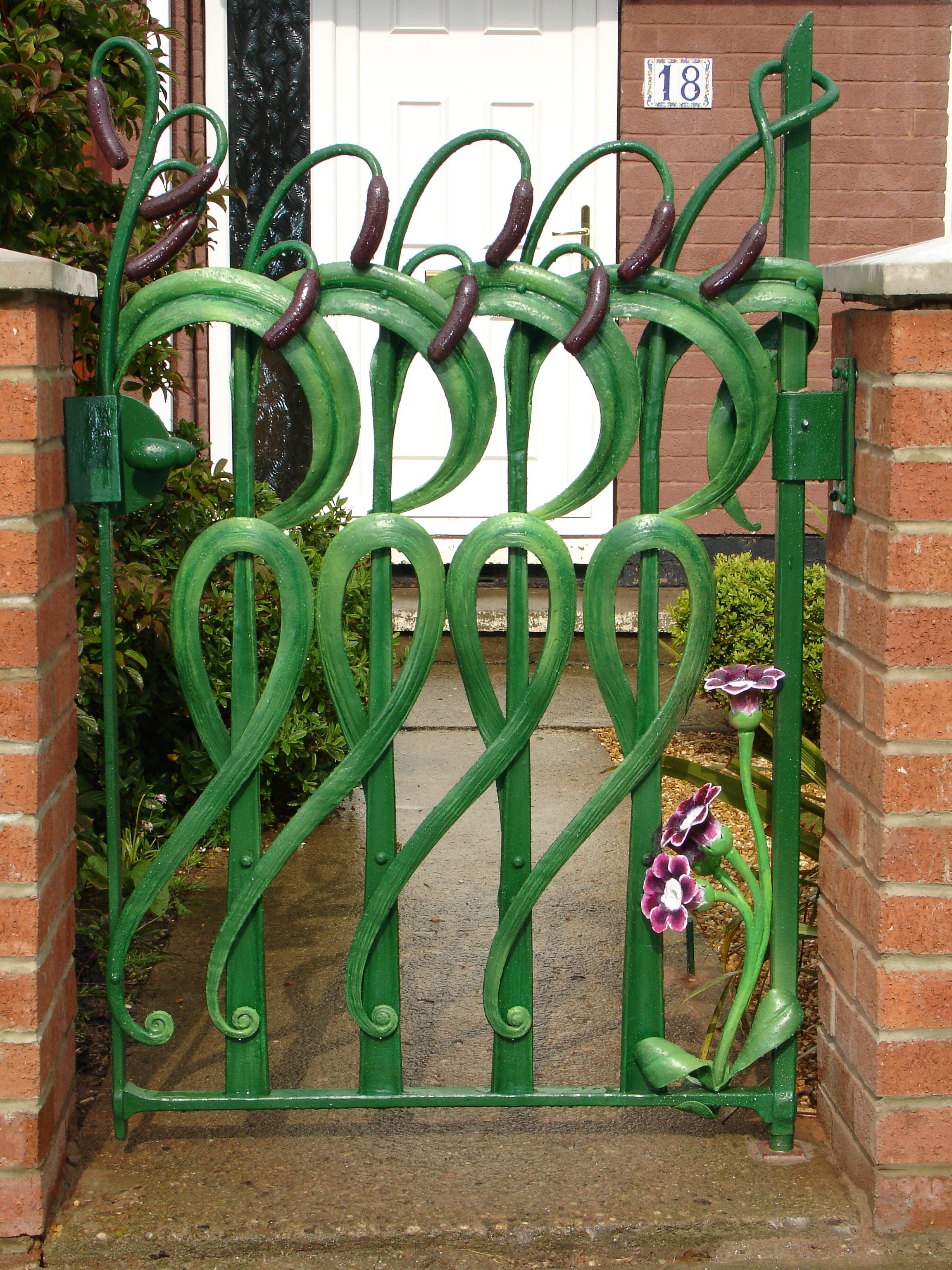
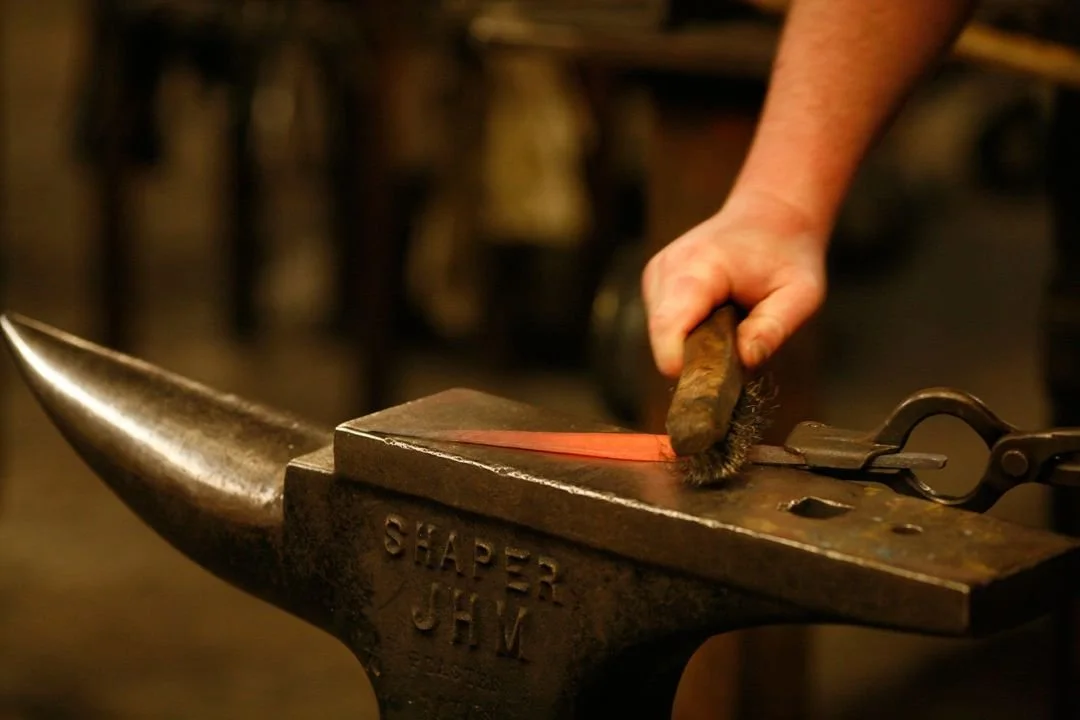
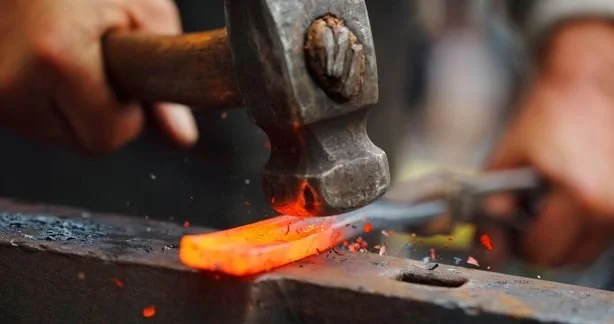
A blacksmith is defined less by what they make and more by how they approach metal. They heat material to a workable state, move it efficiently, and shape it into something useful or beautiful. Historically, blacksmiths made everything from nails and hinges to ploughshares and gates.
Modern blacksmiths often work in functional or decorative metal, creating hardware, furniture elements, tools, and architectural features. The defining characteristic is versatility. A blacksmith must understand material behaviour broadly and adapt techniques to many different forms.
Because of this breadth, blacksmithing is often the entry point into forging. It builds foundational skills: heat control, hammer technique, drawing, bending, upsetting, punching, and problem-solving at the anvil.
The Bladesmith: Precision and Control
Bladesmithing narrows the focus dramatically.
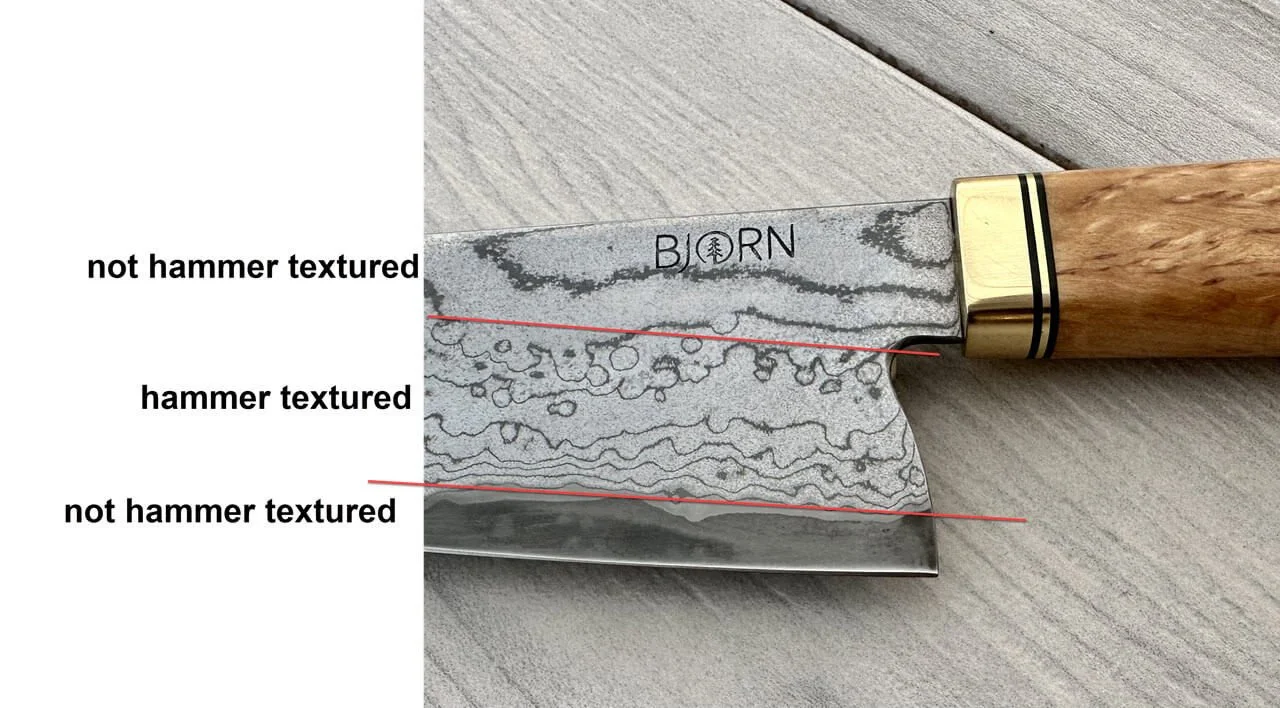
A bladesmith specialises in tools designed to cut — knives, swords, axes, chisels. While the forging stage may look similar to blacksmithing, bladesmithing places enormous emphasis on steel selection and heat treatment.
Unlike general blacksmithing, where many objects never need to harden, bladesmithing lives and dies by metallurgy. Carbon content, grain structure, quenching medium, and tempering cycles are not optional knowledge — they are central to the craft.
A blade that looks perfect but is improperly heat treated is functionally useless and potentially dangerous. This requirement for precision is what separates bladesmithing from general forging. The margin for error is smaller, and the consequences of mistakes are greater.
Many bladesmiths begin as blacksmiths, because the fundamental hammer skills transfer cleanly. What changes is the tolerance for variation.
The Farrier: Metalwork in Service of Biology
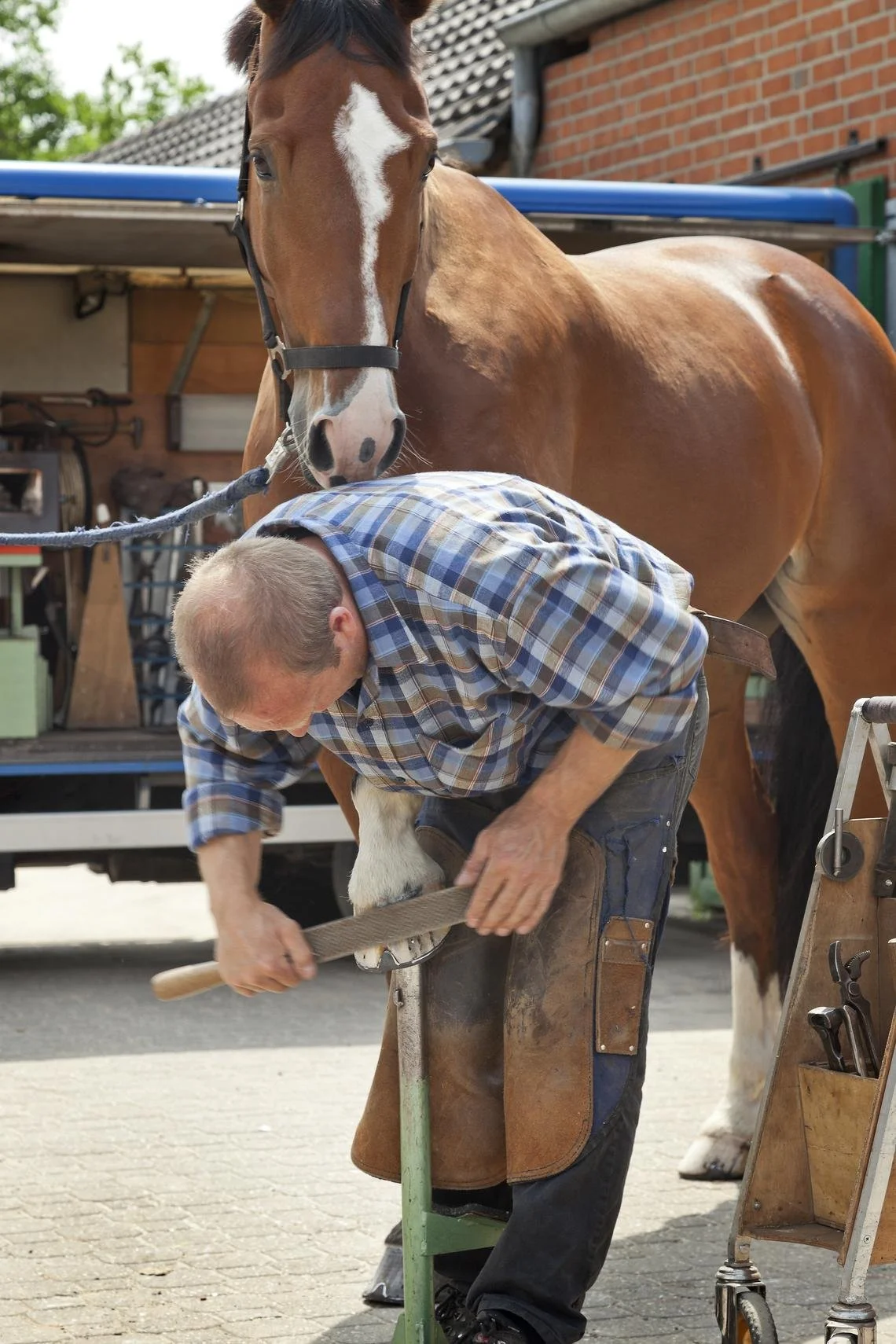
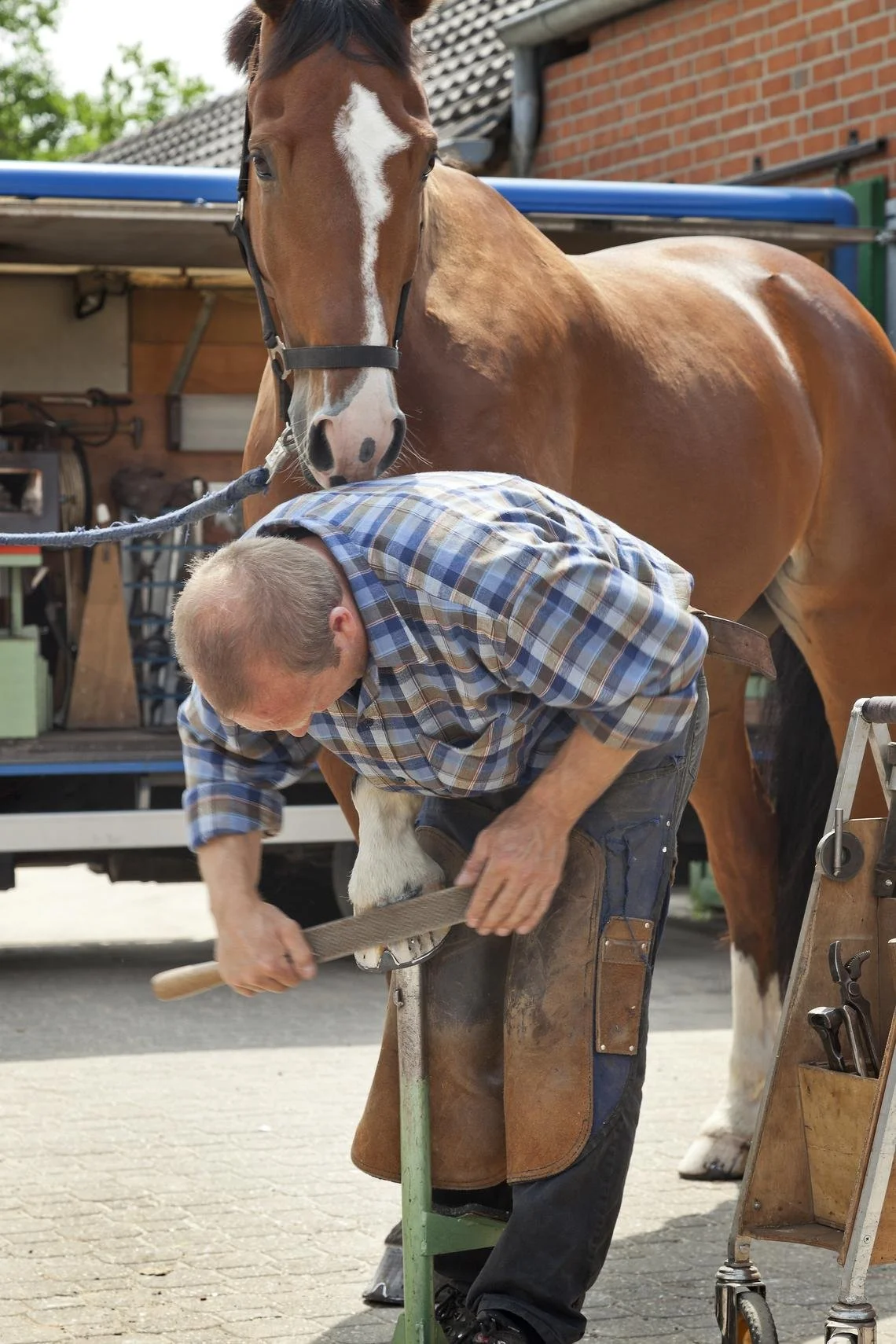
Farriery is often misunderstood as “just making horseshoes.” In reality, it is a unique blend of metalworking, biomechanics, and animal care.
A farrier forges and fits horseshoes, but the metalwork is secondary to the horse’s health. Balance, weight distribution, gait, and hoof structure matter more than aesthetic finish. A beautifully forged shoe that causes discomfort is a failure.
Unlike blacksmithing or bladesmithing, farriery demands speed and consistency. Shoes are often forged and fitted on site, sometimes under time pressure, with a living animal involved. This requires decisiveness and confidence rather than experimentation.
While farriers use many blacksmithing techniques, their craft is defined by its relationship to anatomy. That makes it a practical, physically demanding, and highly specialised discipline.
The Armourer: Shaping Protection, Not Tools
Armourers work with metal in a fundamentally different way.
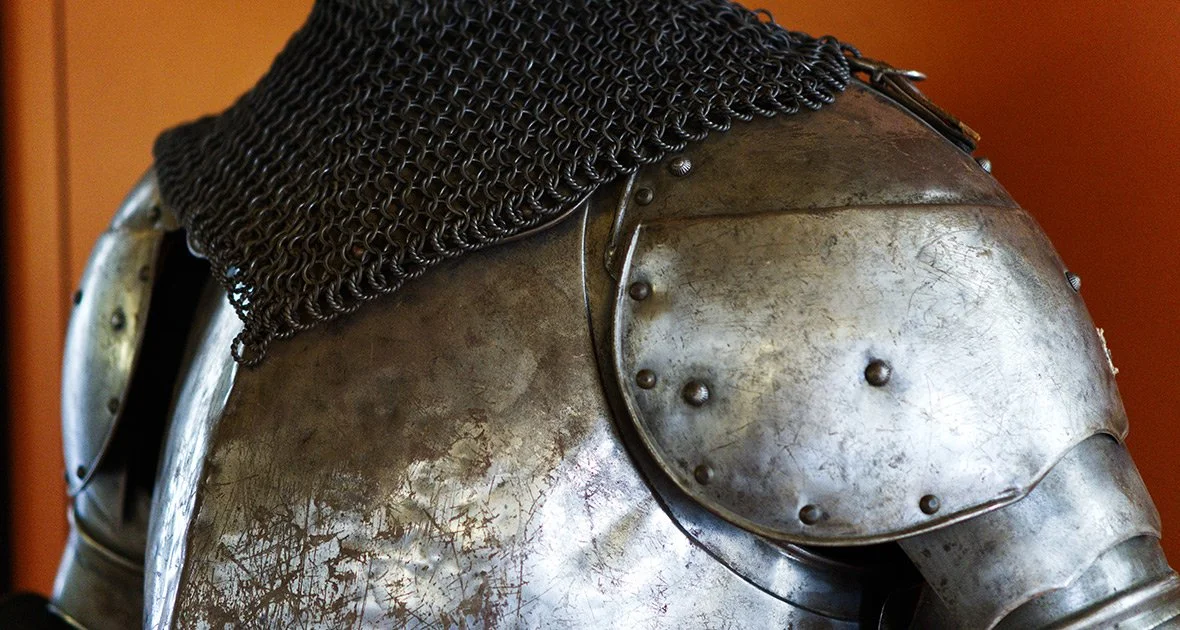
Rather than creating tools or edges, armourers shape metal to protect the human body. This requires a deep understanding of form, movement, and how plates interact. Armour must curve, articulate, overlap, and flex while remaining strong.
Unlike many blacksmithing tasks, armour work often involves extensive cold shaping, planishing, and controlled forming rather than heavy forging. Heat is used selectively, not constantly. Precision matters, but in shape rather than hardness.
Historically, armourers were highly specialised craftsmen working for armies, nobility, or state institutions. Today, the craft survives in historical reproduction, reenactment, and film work, where accuracy and fit are paramount.
Where the Crafts Overlap — and Where They Don’t
The confusion between these roles exists because the tools overlap, but the intent does not.
A blacksmith might forge a knife.
A bladesmith might forge a guard or pommel.
A farrier uses blacksmithing techniques daily.
An armourer may forge tools to make armour.
What changes is not the forge, hammer, or anvil — it is the end goal.
Purpose determines priorities. Priorities determine technique.
A More Useful Way to Think About the Differences
Instead of thinking in terms of job titles, think in terms of questions:
Is this meant to cut? → bladesmithing
Is this meant to support weight or movement? → farriery
Is this meant to protect the body? → armour work
Is this meant to solve a general problem? → blacksmithing
This framing helps beginners choose a path without feeling boxed in.
Which Path Makes Sense to Start With?
For most people, blacksmithing is the best place to begin.
It teaches:
how metal moves
how heat affects structure
how to control tools and body mechanics
Those fundamentals transfer cleanly into bladesmithing, farriery, or armour work. Starting too specialised too early often leads to gaps that become limiting later.
Can One Person Practice Multiple Disciplines?
Absolutely — and historically, many did.
The distinctions exist to describe focus, not to impose limits. A skilled blacksmith can become a bladesmith. A bladesmith may study armour. A farrier may apply forging skills elsewhere.
The crafts are connected by fire and steel, but separated by intent.
Final Thought
All four disciplines exist because humans needed metal shaped for different reasons.
Understanding the difference isn’t about choosing a label — it’s about recognising why the metal is being shaped, and letting that purpose guide technique, tools, and learning.
Once that clicks, the forge stops being confusing and starts to feel coherent.